When you schedule a routine dental cleaning, you may think you already know what to expect: sit back, have your teeth cleaned, rinse, and leave with a fresh smile. But a professional dental cleaning is about much more than simply removing plaque and polishing your teeth.
Routine dental cleanings give your dental team an opportunity to evaluate your oral health, identify early warning signs, and help prevent problems before they become more serious. In many cases, what looks like a simple cleaning appointment can play an important role in protecting your teeth, gums, and overall oral health.
What Really Happens During a Dental Cleaning?
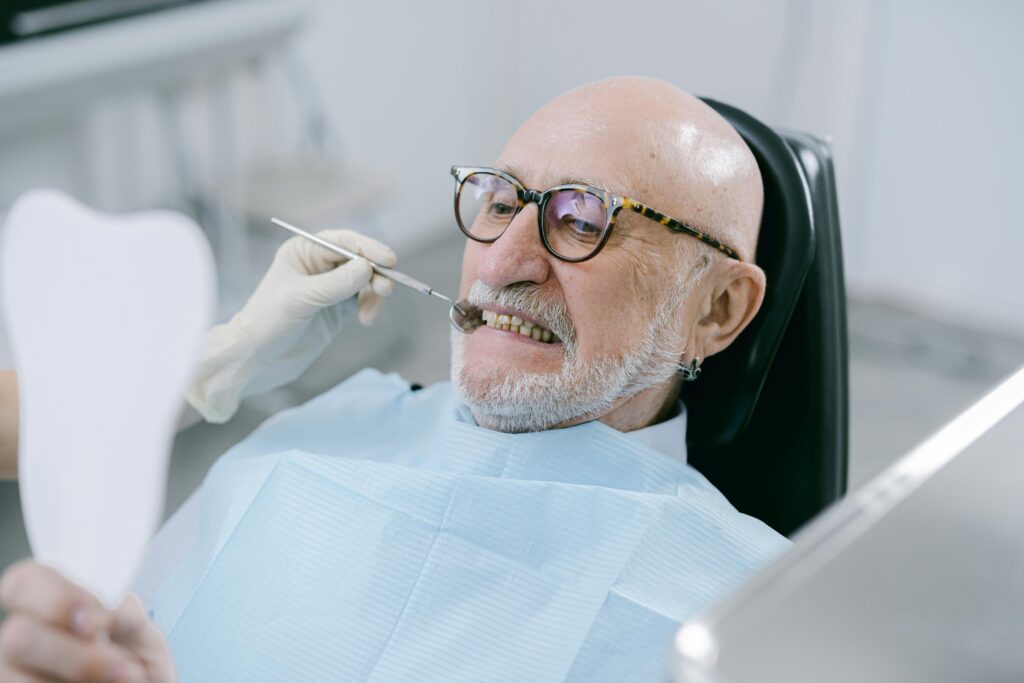
A professional cleaning typically involves removing plaque and tartar buildup that regular brushing and flossing cannot completely eliminate.
Plaque is a sticky film of bacteria that continuously forms on your teeth. When it is not removed effectively, it can harden into tartar, also called calculus. Unlike plaque, tartar cannot be removed with a regular toothbrush and requires professional dental instruments.
During your cleaning, your dental professional may carefully clean around the gumline and between the teeth, where bacteria and tartar commonly accumulate. Your teeth may then be polished to remove surface stains and leave them feeling smooth and clean.
But the appointment does not stop there.
Your Gums May Reveal More Than You Think
One of the most important parts of a routine cleaning is checking the condition of your gums.
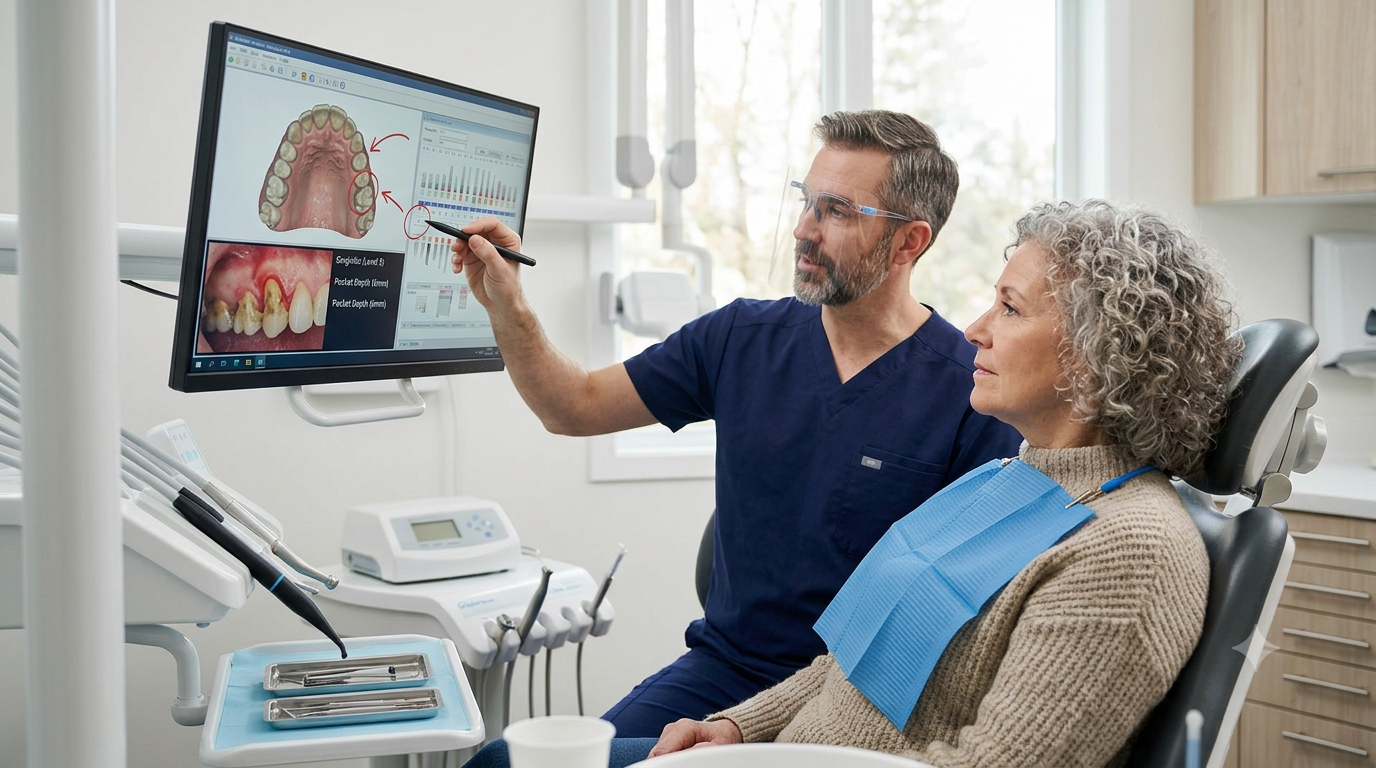
Healthy gums generally do not bleed easily and should fit snugly around the teeth. Redness, swelling, tenderness, or bleeding during brushing or flossing can be signs of gum inflammation.
If gum disease develops, it can progress from gingivitis to periodontitis, a more advanced form of periodontal disease that can affect the tissues and bone supporting your teeth.
During your visit, your dental team can look for changes in your gum health and determine whether additional evaluation or periodontal care may be necessary.
Catching gum problems early can make treatment simpler and help prevent more extensive damage.
A Cleaning Appointment Can Help Detect Cavities
You may not always know when a cavity is developing.
Early tooth decay can sometimes occur without noticeable pain or sensitivity. That is why regular dental visits are important even when your teeth feel perfectly fine.
While a cleaning itself does not diagnose every dental problem, your dental team can examine your teeth for visible signs of decay, weakened areas, or other concerns. If something requires a closer look, your dentist may recommend dental X-rays or additional diagnostic testing.
Finding a cavity early may allow for a more conservative treatment before the decay becomes larger or reaches the deeper layers of the tooth.
Your Dentist May Notice Signs You Haven’t
Your mouth can provide clues about your oral health that you may not notice at home.
During a routine visit, your dental team may identify issues such as:
- Excessive plaque or tartar buildup
- Gum inflammation or bleeding
- Tooth decay
- Enamel wear
- Tooth sensitivity
- Cracks or damaged teeth
- Signs of teeth grinding
- Changes in existing dental restorations
- Areas that may require closer monitoring
Some of these issues may not cause symptoms right away. Regular appointments create an opportunity to identify them before they become painful or interfere with your daily life.
What About Your Oral Cancer Screening?
Depending on your appointment and individual needs, your dentist may also evaluate the tissues of your mouth, including your lips, cheeks, tongue, gums, and other areas.
The goal is to identify unusual changes that may require further evaluation.
Oral cancer screenings are an important part of comprehensive dental care because early detection can make a significant difference. If your dentist notices something unusual, they can recommend the appropriate next step rather than allowing a concerning change to go unnoticed.
Professional Cleanings Reach Places Your Toothbrush Can’t
Even with excellent brushing and flossing habits, certain areas of your mouth can be difficult to clean thoroughly.
Crowded teeth, deep grooves, spaces between teeth, and areas around existing dental work can allow plaque to remain hidden. Tartar can also build up in areas that are difficult to reach at home.
A professional cleaning helps address these areas and complements your daily oral hygiene routine.
Think of your home care as the foundation of your oral health and professional cleanings as an important part of maintaining that foundation.
Cleanings Can Help Protect Your Smile Long-Term
Preventive dental care is often easier than treating a problem after it has progressed.
Skipping cleanings may allow plaque and tartar to accumulate, increasing the risk of gum disease and tooth decay. When dental problems are discovered later, treatment may become more involved.
Regular appointments allow your dental team to monitor changes in your oral health over time. This ongoing monitoring can help your dentist recognize patterns, recommend personalized preventive care, and address concerns before they become bigger problems.
How Often Should You Get a Dental Cleaning?
There is no single schedule that works for everyone.
Many people benefit from visiting their dentist approximately every six months, but some patients may need more frequent appointments based on their oral health, history of gum disease, risk of cavities, oral hygiene, or other individual factors.
Your dentist can recommend a cleaning schedule based on your specific needs.
Don’t Wait Until Something Hurts
One of the biggest misconceptions about dental care is that you only need an appointment when you have tooth pain.
Pain can be a sign that a dental problem has already progressed. Preventive visits are designed to help identify potential concerns before they reach that stage.
So, the next time you schedule a “routine cleaning,” remember that you are doing more than getting your teeth polished.
You are giving your dental team an opportunity to evaluate your gums, monitor your teeth, identify potential concerns, and help you maintain a healthier smile.
At Wilson Dental, routine dental care can be an important part of your long-term oral health. If it has been a while since your last dental cleaning or checkup, scheduling an appointment can be a simple step toward keeping your smile healthy for years to come.