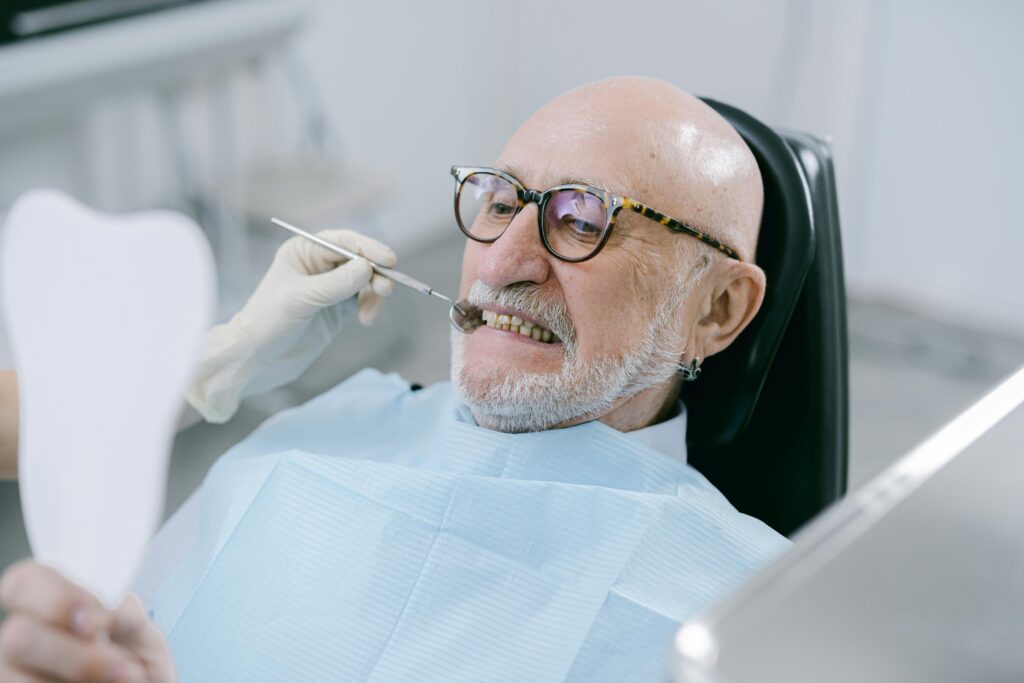
Losing a single tooth may seem like a small problem, especially when the gap is not immediately visible. However, a missing tooth can affect more than your smile. Over time, it may influence your chewing ability, the alignment of surrounding teeth, and the health of your jawbone.
When it comes to replacing a missing tooth, two common options are a single tooth dental implant and a dental bridge. Both can restore the appearance and function of your smile, but they work differently and have different implications for your long-term oral health.
Understanding these differences can help you make an informed decision with your dentist.
What Is a Single Tooth Dental Implant?
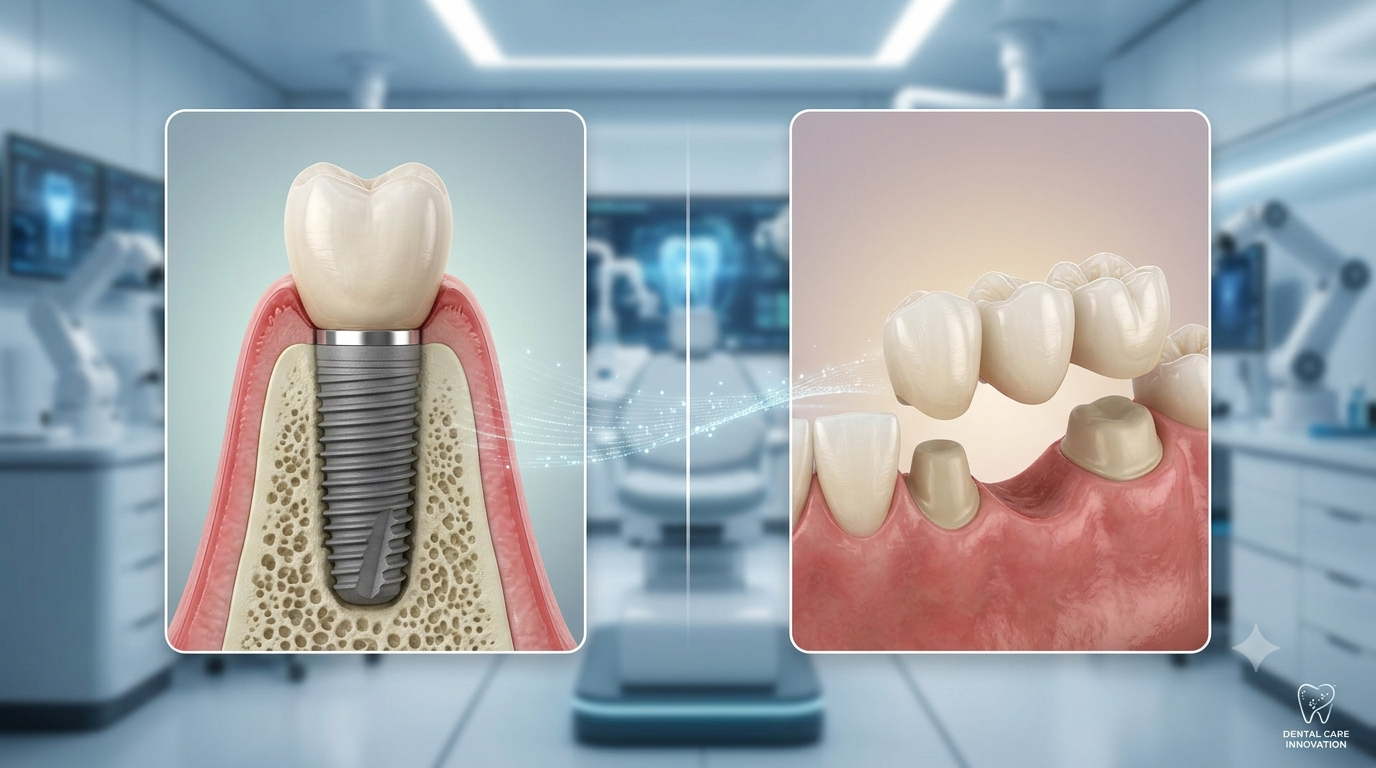
A single tooth implant is a replacement tooth designed to function independently. It consists of a small titanium or other biocompatible implant placed in the jawbone, an abutment that connects the components, and a dental crown that looks and functions like a natural tooth.
Over time, the implant integrates with the surrounding bone through a process called osseointegration. This provides a stable foundation for the replacement tooth.
One of the biggest advantages of a dental implant is that it does not rely on neighbouring teeth for support. Healthy adjacent teeth can remain intact, making implants a suitable option for many people who want to replace a missing tooth without altering the surrounding teeth.
What Is a Dental Bridge?
A dental bridge replaces a missing tooth by using the neighbouring teeth for support. In a traditional dental bridge, crowns are placed over the teeth on either side of the gap, with an artificial tooth, called a pontic, filling the space.
Unlike an implant, a traditional bridge does not require a post to be placed in the jawbone. This can make it a practical option for patients who may not be suitable candidates for implant surgery or who prefer a different treatment approach.
However, supporting teeth usually need to be reshaped to accommodate the crowns. This means that even healthy teeth may require permanent modification.
5 Ways Implants and Bridges Affect Your Oral Health Differently
1. Impact on Neighbouring Teeth
A single tooth implant stands independently and does not require support from adjacent teeth. This helps preserve the natural structure of the surrounding teeth.
A traditional dental bridge, on the other hand, depends on neighbouring teeth for stability. These teeth generally need to be prepared for crowns, which involves removing some enamel. Since enamel does not grow back, this change is permanent.
Why it matters: If the teeth beside the gap are healthy, an implant may help preserve their natural structure. If those teeth already have large fillings or need crowns, a bridge may be a reasonable option.
2. Jawbone Health and Stability
Your jawbone receives stimulation when you chew through the roots of your natural teeth. When a tooth is lost, the bone in that area can gradually shrink because it no longer receives the same stimulation.
A dental implant can help maintain bone in the area by transmitting chewing forces to the jawbone. However, it does not guarantee that bone loss will never occur.
A conventional dental bridge replaces the visible tooth but does not replace its root. Consequently, it generally does not provide the same direct stimulation to the underlying bone at the missing tooth site.
Why it matters: Bone preservation is an important consideration when planning long-term tooth replacement, particularly if the missing tooth is in an area where bone loss could affect future treatment.
3. Cleaning and Gum Health
Both implants and bridges require consistent oral hygiene to maintain healthy gums and prevent complications.
Implants can generally be brushed and flossed much like natural teeth, although special cleaning tools may be recommended. Plaque buildup around an implant can cause inflammation and, in more serious cases, peri-implantitis, which can damage the surrounding bone.
Bridges require additional attention because food particles and plaque can collect beneath the artificial tooth and around the supporting crowns. Floss threaders or interdental brushes can help clean these difficult-to-reach areas.
Why it matters: Neither option eliminates the need for regular dental visits. Your daily cleaning routine and professional maintenance play an important role in the long-term success of either treatment.
4. Chewing Comfort and Everyday Function
Both options can restore chewing function and improve your ability to eat comfortably.
Once fully healed and restored, a dental implant provides a stable replacement that functions independently. A well-designed bridge can also provide reliable chewing support, particularly when the supporting teeth and gums are healthy.
The right choice depends on your bite, the location of the missing tooth, the condition of adjacent teeth, and your overall oral health.
Why it matters: Your replacement tooth should not only look natural but also fit comfortably with your bite and support everyday activities without unnecessary strain.
5. Long-Term Maintenance and Durability
Dental implants can last for many years, and some last for decades with appropriate care. However, the crown may eventually need repair or replacement, and the implant itself can develop complications.
Dental bridges also offer dependable results, but they may need replacement over time due to wear, damage, gum changes, or problems affecting the supporting teeth.
Both treatments require routine checkups, good oral hygiene, and attention to any changes in comfort or function.
Why it matters: Consider the long-term maintenance needs of each option rather than choosing based solely on the initial procedure or cost.
Which Option Is Better for Your Oral Health?
There is no single answer that works for everyone. A dental implant may be a good choice if you have sufficient jawbone, healthy gums, and suitable overall health. In some cases, additional procedures, such as bone grafting, may be necessary.
A dental bridge may be more appropriate when neighbouring teeth already need crowns, implant surgery is unsuitable, or a patient prefers to avoid a surgical procedure.
Your dentist will assess your teeth, gums, jawbone, bite, medical history, and personal preferences before recommending treatment. Factors such as smoking, uncontrolled diabetes, and certain medications may also influence implant planning and healing.
Replacing a missing tooth is about more than closing a gap in your smile. It is also about protecting the surrounding teeth, supporting healthy gums, maintaining jawbone structure, and restoring comfortable chewing.
Both single tooth implants and dental bridges can be effective solutions. The best option is the one that meets your clinical needs and supports your long-term oral health.
Have a missing tooth and are unsure which treatment is right for you? Schedule a dental consultation to explore your options and understand the benefits, limitations, and maintenance requirements of each approach. A personalised treatment plan can help you make a confident decision about your smile.