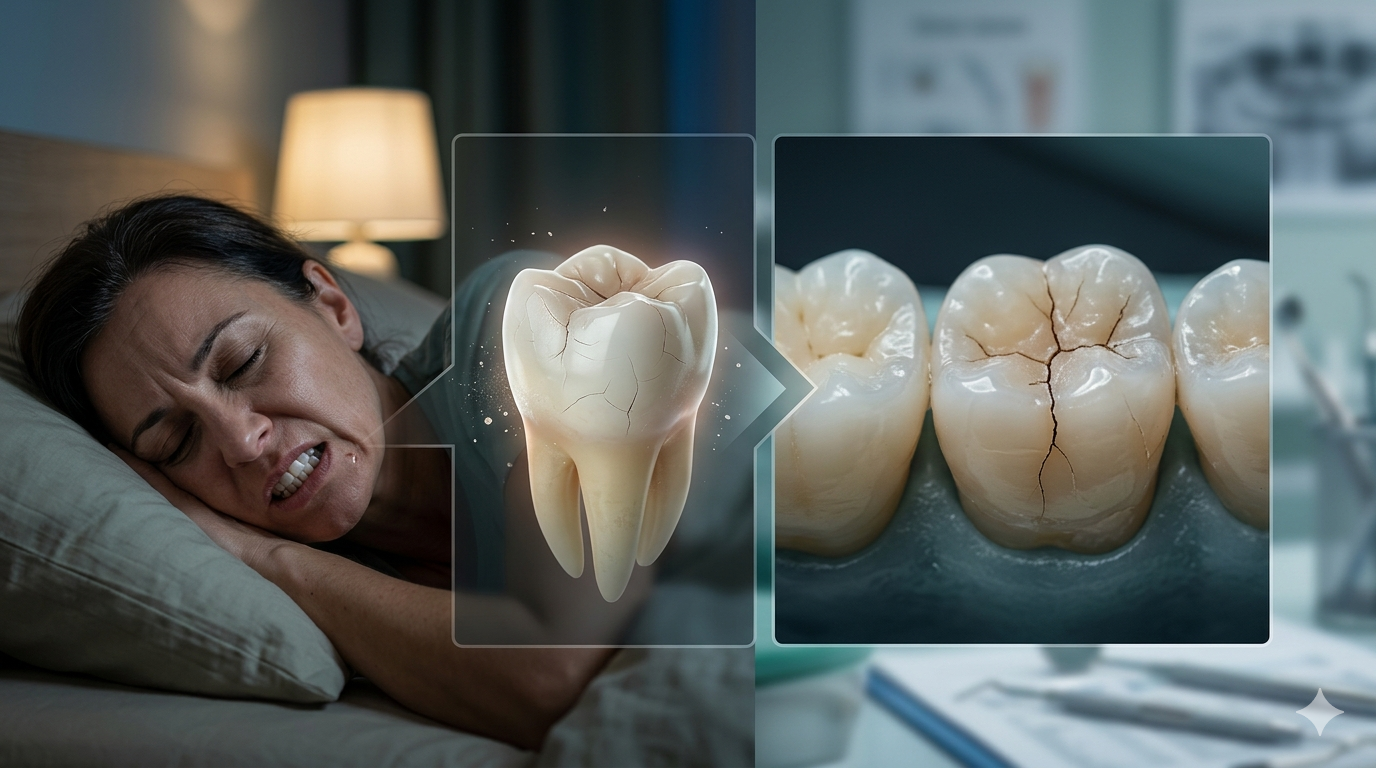
Do you wake up with a sore jaw, headaches, or sensitive teeth without knowing why? You may be experiencing night grinding, also known as sleep bruxism—a common but often unnoticed habit that can silently damage your teeth over time. Many people grind or clench their teeth during sleep without realizing it, and the pressure created can be strong enough to crack enamel, wear down teeth, and even lead to long-term jaw issues.
Let’s understand what night grinding is, why it happens, and how you can protect your smile before serious damage occurs.
What Is Night Grinding (Sleep Bruxism)?
Night grinding refers to the involuntary clenching or grinding of teeth during sleep. Unlike daytime clenching, which some people notice, sleep bruxism happens unconsciously. Since it occurs while you’re asleep, it can continue for months or even years before someone realizes it.
In many cases, the first person to notice is a partner who hears the grinding sound at night. For others, the signs appear gradually in the form of tooth pain, jaw tightness, or dental cracks.
Why Night Grinding Is Dangerous for Your Teeth
The biggest issue with sleep bruxism is the amount of force involved. The pressure from grinding can be significantly stronger than normal chewing. Over time, this can lead to serious dental problems, such as:
- Cracked or Chipped Teeth
Constant grinding weakens the enamel and creates tiny fractures. These small cracks may grow larger and eventually cause a noticeable chip or break.
- Worn-Down Enamel
Enamel is your tooth’s protective layer. Grinding slowly wears it down, making teeth more sensitive and more prone to decay.
- Tooth Sensitivity
Once enamel wears away, the inner layers of the tooth become exposed. This can cause discomfort when eating hot, cold, or sweet foods.
- Loose Teeth and Gum Damage
Long-term grinding can damage the ligaments supporting your teeth, leading to mobility or gum irritation.
- Jaw Pain and TMJ Disorders
Bruxism puts constant stress on your jaw joints, potentially causing TMJ problems, clicking sounds, jaw locking, and chronic facial pain.
Common Causes of Night Grinding
There isn’t always one clear cause, but sleep bruxism is often linked to lifestyle and health factors, including:
- Stress and anxiety
- Poor sleep quality
- Sleep apnea
- Misaligned teeth or bite issues
- Excess caffeine or alcohol consumption
- Smoking
- Certain medications, especially antidepressants
Stress remains one of the most common triggers, which is why bruxism is often more noticeable during emotionally demanding periods.
Signs You Might Be Grinding Your Teeth at Night
Even if you don’t hear yourself grinding, your body may show warning signs. Watch for:
- Jaw soreness in the morning
- Frequent headaches (especially near temples)
- Flattened or worn teeth
- Tooth pain without cavities
- Increased tooth sensitivity
- Clicking or popping jaw sounds
- Broken fillings or dental crowns
- Tight facial muscles after waking up
If you notice these symptoms regularly, it’s time to consult a dentist.
How to Stop Night Grinding and Protect Your Teeth
While it may not always be possible to completely stop bruxism immediately, you can prevent serious damage with the right approach.
- Wear a Night Guard
A custom dental night guard is one of the most effective treatments. It creates a protective barrier between your upper and lower teeth, preventing cracks and enamel wear.
- Reduce Stress Before Bed
Since stress is a major cause, relaxing bedtime habits can help, such as:
- Meditation or deep breathing
- Light stretching
- Avoiding screens before sleep
- Limit Caffeine and Alcohol
Caffeine and alcohol can increase grinding activity, especially if consumed late in the day.
- Treat Sleep Disorders
If bruxism is linked to sleep apnea or disrupted sleep patterns, treating the root condition can reduce grinding.
- Fix Bite Misalignment
If your teeth are not properly aligned, your dentist may suggest corrective treatments like orthodontics or bite adjustment.
When to See a Dentist
If you suspect night grinding, don’t wait until your teeth crack or break. Early detection can prevent expensive dental procedures like crowns, root canals, or implants.
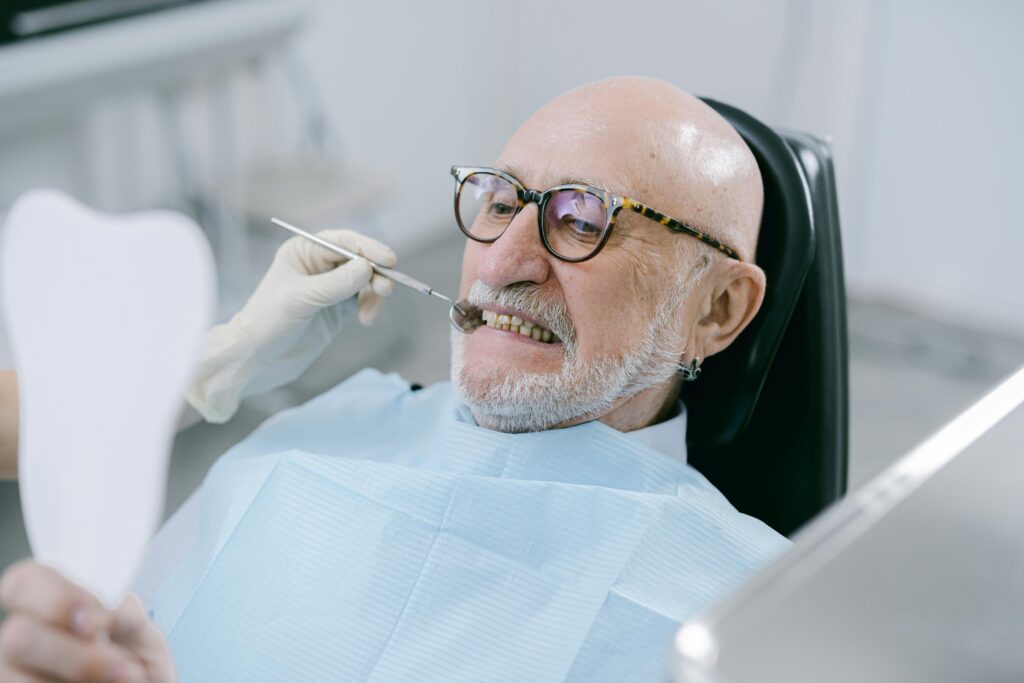
A dentist can evaluate your bite, check for wear patterns, and recommend the right protection—especially a custom night guard tailored for your mouth.
Night grinding is a silent habit, but the damage it causes can be loud and costly. From cracked teeth to jaw disorders, sleep bruxism can affect both your dental health and overall comfort. The good news is that with early diagnosis and preventive care, you can protect your teeth and stop the habit from destroying your smile.
If you’re waking up with jaw pain or unexplained tooth sensitivity, it may be time to take night grinding seriously—because your teeth deserve protection even while you sleep.