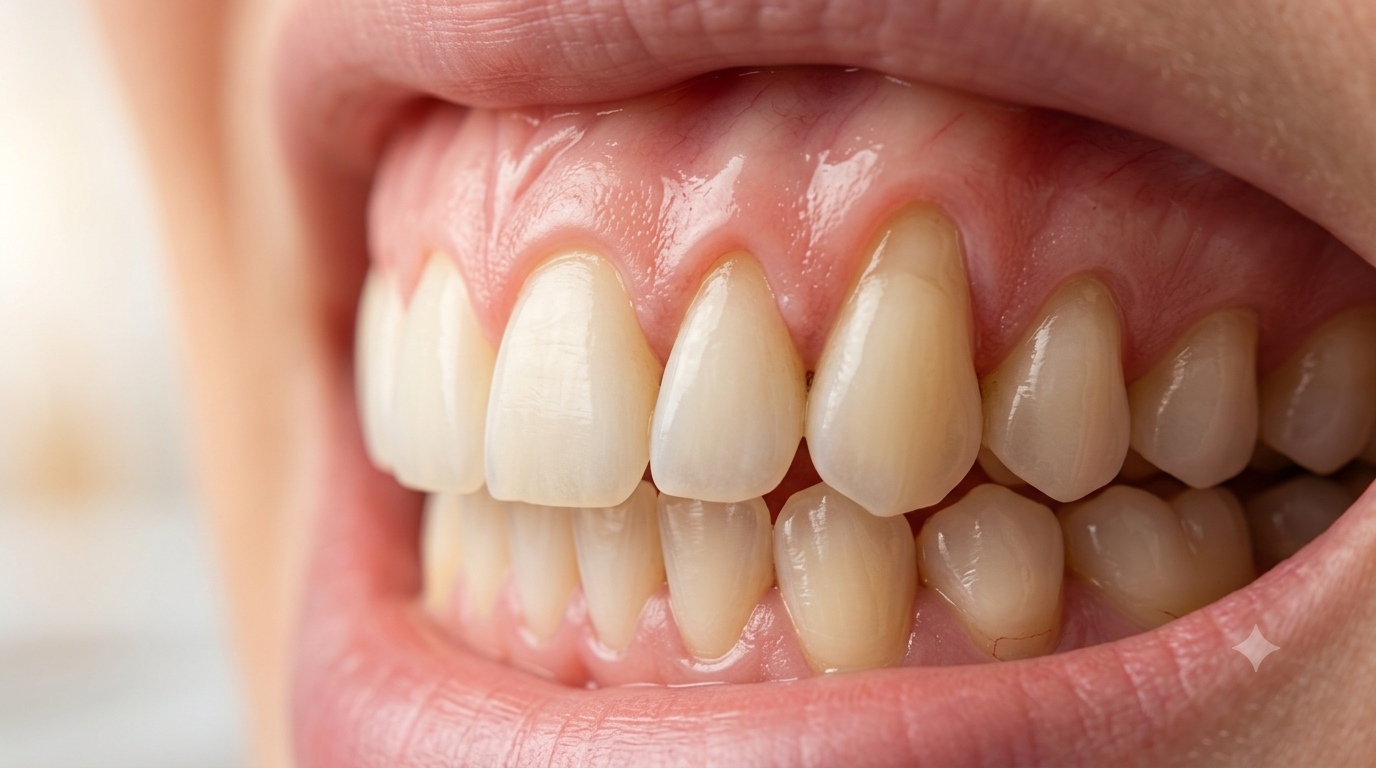
Have you noticed that your teeth look slightly longer than they used to? Or perhaps your gums seem to be pulling away from your teeth, making more of the tooth surface visible. While these changes may appear subtle at first, they could be signs of gum recession, a common dental condition that deserves attention.
Gum recession occurs when the gum tissue surrounding the teeth gradually wears away or pulls back, exposing more of the tooth or its root. Beyond affecting the appearance of your smile, it can increase tooth sensitivity, make cleaning more difficult and, in advanced cases, contribute to tooth loss.
Understanding why gum recession happens and recognising its early signs can help protect your oral health.
What Exactly Is Gum Recession?
Healthy gums fit snugly around the teeth, covering and protecting their roots. When gum recession develops, this protective tissue moves away from the tooth, exposing areas that are normally covered.
Unlike the visible crown of a tooth, the root surface does not have the same protective enamel covering. This makes exposed roots more vulnerable to sensitivity, decay and damage.
Gum recession can affect a single tooth or several teeth. It often develops gradually, which means many people do not notice it until their teeth begin to look longer or feel more sensitive.
Why Do Gums Start Receding?
Gum recession does not happen for just one reason. Several factors can contribute to the gradual loss of gum tissue.
- Brushing Too Hard
Brushing aggressively or using a hard-bristled toothbrush can irritate and damage gum tissue over time. Applying excessive pressure may contribute to recession, particularly around teeth where the gums are already thin.
Switching to a soft-bristled toothbrush and using gentle, circular brushing motions can help protect your gums.
- Gum Disease
Periodontal disease is one of the major causes of gum recession. Bacterial plaque can build up along the gumline, causing inflammation and infection.
As the condition progresses, it can damage the gum tissue and supporting bone around the teeth, causing the gums to pull away.
- Genetics and Naturally Thin Gums
Some people naturally have thinner gum tissue or a genetic predisposition to gum recession. Even with good oral hygiene, they may be more susceptible to changes in their gumline.
- Teeth Grinding and Clenching
Habitual teeth grinding, also known as bruxism, places excessive pressure on the teeth and surrounding structures. While it is not a direct cause in every case, it may contribute to existing gum and periodontal problems.
- Misaligned Teeth or Dental Trauma
Teeth that sit outside the normal dental arch may have thinner supporting gum tissue, making certain areas more vulnerable to recession. Lip or tongue piercings and other forms of repeated trauma can also irritate gum tissue.
Common Signs You Shouldn’t Ignore
Gum recession often develops without causing pain initially. However, there are several warning signs to watch for:
- Teeth appearing longer: More of the tooth becomes visible as the gumline moves back.
- Increased sensitivity: Hot, cold, sweet or acidic foods may cause discomfort due to exposed roots.
- Visible root surfaces: The area near the gumline may appear yellowish or darker than the rest of the tooth.
- Uneven gumline: One tooth may appear longer than its neighbouring teeth.
- Notches near the gumline: Small grooves may develop where the tooth meets the gums.
- Changes in your bite: In advanced periodontal disease, supporting structures may weaken and teeth can become loose.
If you notice any of these changes, a dental evaluation can help identify the underlying cause.
Can Receding Gums Grow Back Naturally?
This is one of the most common questions patients ask, and the answer is important: receded gum tissue does not naturally grow back on its own.
However, early intervention can help prevent further recession and protect the remaining gum tissue.
Depending on the severity and cause, a dentist may recommend professional cleaning, periodontal treatment, changes to brushing habits or other targeted procedures.
For more advanced cases, gum grafting may be considered. This procedure involves adding tissue to areas where the gums have receded to cover exposed roots, improve protection and restore the gumline.
The appropriate treatment depends on the extent of recession, the condition of the supporting structures and the patient’s overall oral health.
How Can You Prevent Further Gum Recession?
Although not every case of gum recession can be prevented, a few consistent habits can help reduce the risk:
- Brush twice daily using a soft-bristled toothbrush and gentle pressure.
- Floss daily to remove plaque and food particles between teeth.
- Schedule regular dental checkups and professional cleanings.
- Avoid aggressive brushing and habits that repeatedly irritate the gums.
- Seek treatment for gum disease at the earliest stage.
- Discuss teeth grinding with a dentist if you frequently clench or grind your teeth.
These simple steps can make a meaningful difference in maintaining healthy gums.
When Should You Visit a Dentist?
If your teeth are starting to look longer, your gums appear uneven or you experience increasing tooth sensitivity, do not dismiss these changes as normal ageing.
Gum recession is a progressive condition, and identifying its cause early can help prevent further damage. A dentist can assess your gum health, measure the extent of recession and recommend an appropriate treatment plan.
Healthy gums do more than frame your smile. They protect the foundation of your teeth.
Taking action when you first notice changes can help preserve that protection and keep your smile healthy for years to come. Schedule a dental consultation if you have concerns about your gumline or notice signs of recession.